Cardiff-Japanese Webinar Series: Reading Fashion: 17th Century Kimono Designs and Classical Japanese Literature
- Wednesday 28 January 2026
- 12:00 - 13:00
- This event has passed
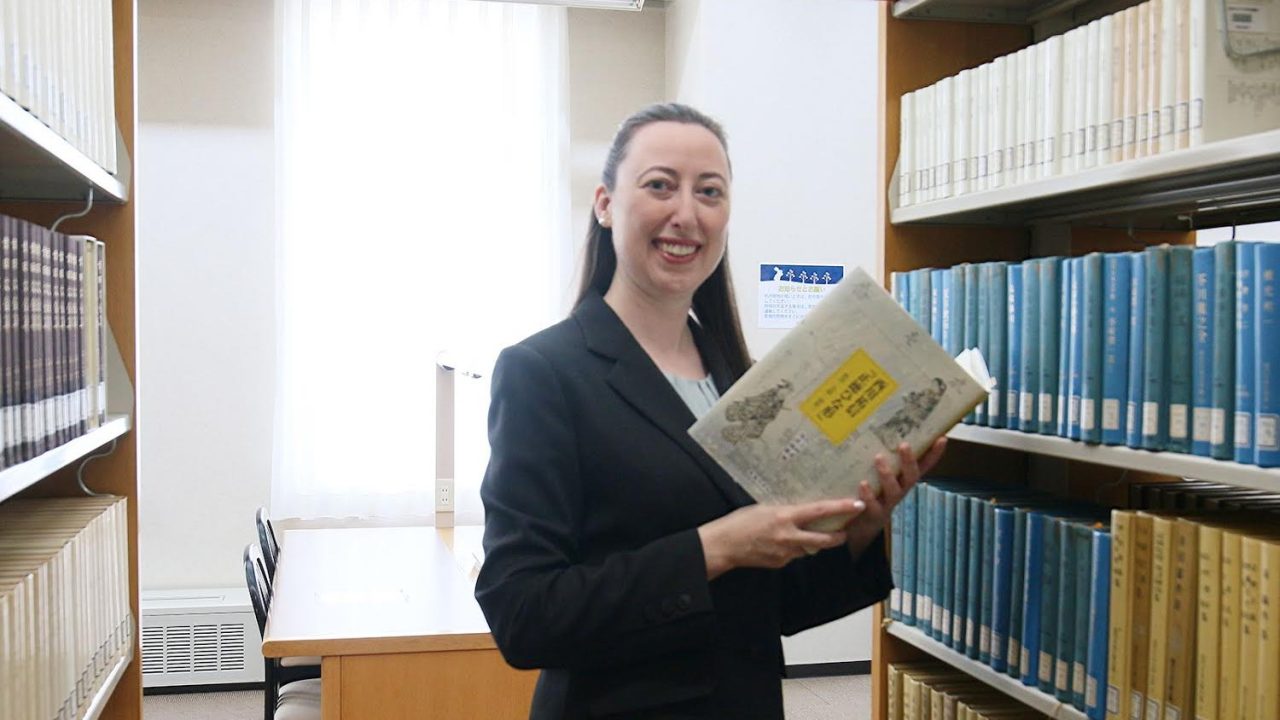
Discover how kimono patterns tell stories in Dr. Michelle Kuhn’s exploration of Genji hinagata (1687) and its literary and historical connections at the 19th lecture in the Cardiff-Japanese webinar series.
For the 19th Cardiff-Japanese Lecture, we are thrilled to welcome Dr Michelle Kuhn! Dr Kuhn is a scholar of classical Japanese literature and visual culture, with a particular interest in the ways literary texts and material design intersect in early modern Japan. In this talk, she will explore kimono designs from the pattern book Genji hinagata (1687), focusing on how words and motifs embedded in the patterns can point to wider literary and historical narratives.
Abstract
This presentation will discuss two kimono designs illustrated in a kimono pattern book titled the Genji hinagata (1687) that feature words within the pattern. Each pattern in this book is inspired by a fictional or historical woman from classical Japan. To understand the meaning of the words “bush warbler” and “cottage” embedded in the Fujitsubo pattern, the reader must make a connection between the fictional Tale of Genji and a historical episode recounted in the Great Mirror. The word “dew” in the Empress Nijō pattern is easily linked to her appearance in the Tales of Ise, however the meaning behind the chrysanthemums in the pattern is less obvious. This presentation will consider the possibility that the chrysanthemum-dew motif is an allusion to the trousseau created for Tokugawa brides in the early 17th century.
Biography
Michelle Kuhn received her PhD from Nagoya University Graduate School of Letters in March 2018. Her research background includes analysing Heian and Edo period Japanese literary texts as well as the critical and cultural reception of those texts. Her research has analysed early modern kimono designs inspired by the Tale of Genji and classical Japanese literature as well as the pre-modern dyeing methods mentioned in early-modern kimono pattern books.
Contact
- School of Modern Languages
- [email protected]